

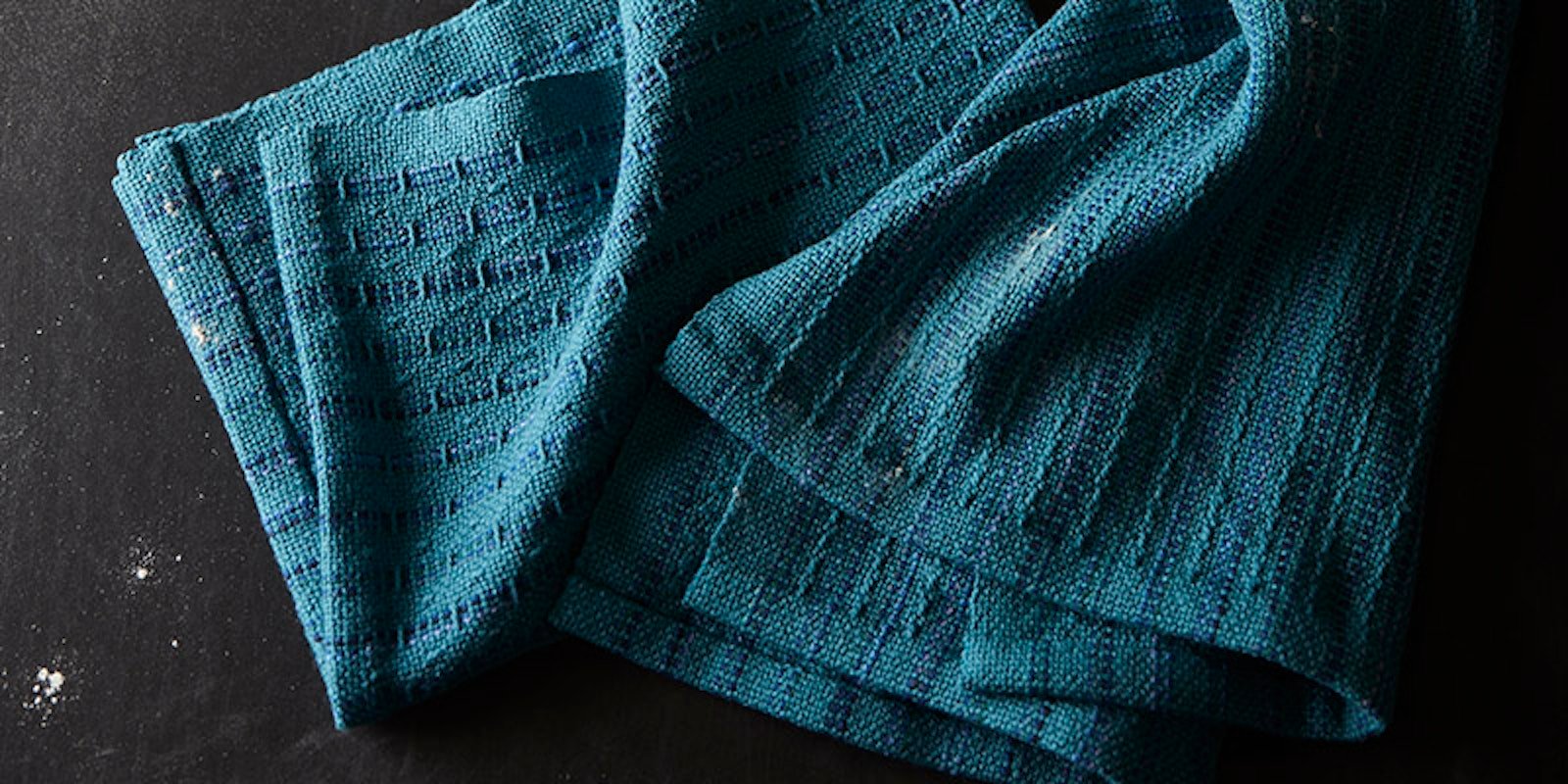
This year, 2026, marks 10 years of Easy Weaving with Little Looms—I can’t believe it either! Since the very first issue, a lot has changed, but our desire to help our readers learn and grow as weavers has remained consistent. Over the years, I've found that the best way to encourage weavers to try a new technique is through beautiful, beginner-friendly projects woven in inexpensive, easily accessible yarns.
For example, my favorite type of project for teaching pick-up was and remains the ever-popular towel. Weaving multiple towels lets you practice multiple types of pick-up, and, if you make mistakes, you’ll still have a perfectly functional towel. So if you page through the back issues of Little Looms, you might notice a plethora of towel projects where each towel features a slightly different pick-up sequence or hand-manipupation technique. In the 2018 issue, that project was Jenny Sennott’s Two Sweet Blue Towels.
Design Details
For the warp, Jenny used three colors of 4/2 cotton to create simple warp stripes while crammed dents add an element of texture, even in areas of plain weave. In fact, I think Jenny could have easily woven her first towel in plain weave and the second in a simple pick-up, and the result would have been gorgeous. Instead, she chose to use pick-up in both towels, giving them both an extra element of intrigue.
The first towel serves as an introductory lesson to pick-up. It uses just one pick-up stick and a simple four-step sequence that’s repeated throughout the length of the towel. The setup and weave sequence are simple—just a step of difficulty above plain weave—and by the end of the towel, you’ll be more than ready to try something slightly more complex. The second towel builds upon the lesson of the first towel by introducing a second pick-up stick and a slightly longer—but still beginner friendly—weave sequence. Both towels are long enough to get the hang of each sequence, without being so long that you’ll get bored. What’s not to love?
A Spicy Variation
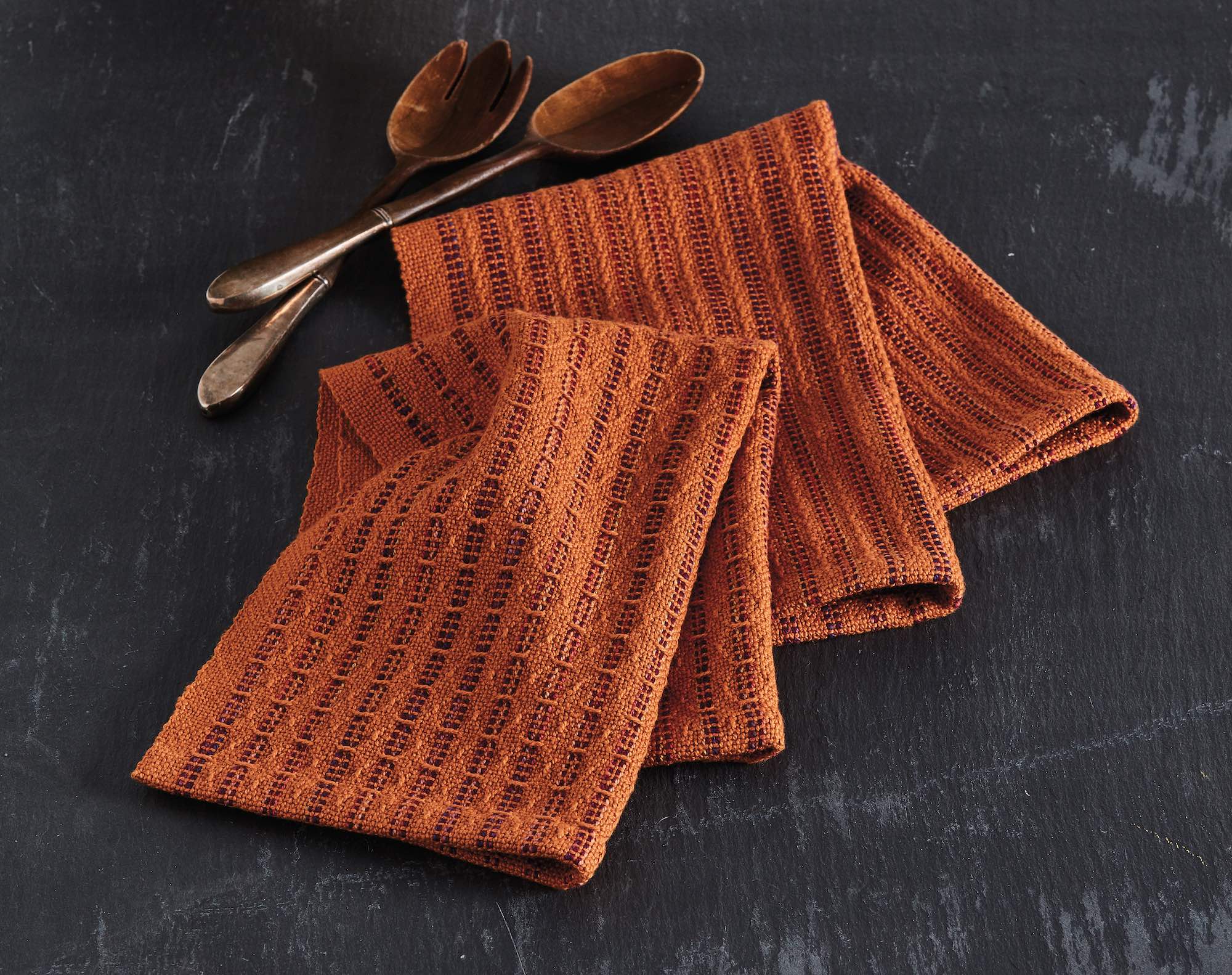
Jenny Sennott’s Two Savory Towels from Handwoven.
While I consider these towels to be an ideal project for Little Looms, these towels started out as a project for our sister magazine, Handwoven. They were originally woven in a warm palette and published as Two Savory Towels for the Rigid-Heddle Loom. Jenny designed her project to pay tribute to rigid-heddle weaving pioneer Betty Linn Davenport. Betty’s book Textures and Patterns for the Rigid Heddle Loom taught countless weavers (including Jenny) about the power of pick-up sticks, opening up a whole new world of patterning for rigid-heddle weavers in the 1970s and beyond.
I knew I needed these towels for Little Looms, but instead of publishing the exact same project from a different magazine, I asked Jenny whether she would be willing to reweave them in a different color palette. Jenny agreed, and wove a second set of towels, this time in beautiful blues reminiscent of blue cotton candy, saltwater taffy, and other sweet treats. Thus, the Two Sweet Towels were born.
Subscriber-Exclusive Downloads
Previously, you could only find the Two Savory Towels project in the Handwoven November/December 2017 issue, but not anymore! Now, you can find both the Two Sweet Towels and the Two Savory Towels as subscriber-exclusive downloads in the Little Looms Library.
I hope you love these projects as much as I do and consider giving one (or both!) a try. Whether you prefer the sweet or savory version, I think you’ll find these towels a treat to weave.
Download the Two Sweet Towels here.
Download the Two Savory Towels here.
Happy Weaving!
Christina
———
P.S. The variegated yarns Jenny used in both versions of the towels have unfortunately been discontinued. Try using doubled Meridian Mill House 8/2 variegated cotton in Fall Ice Plant for the Savory Towels and Coastal Escape for the Sweet version. For a more vibrant, textured option, you could also use Ashford’s Caterpillar Cotton in Inferno (Savory) or Ocean (Sweet). Because such a small amount is needed, you could also try substituting any variegated embroidery or crochet cottons or even variegated rayons you have in your stash that fit the size requirements and color palette.